Why More Women in Dehradun Are Finally Learning to Swim — And What Changed

For years, the answer was the same: ‘I always wanted to learn but…’ The environment didn’t feel right. The timings didn’t work. There was nowhere that felt safe. That conversation is changing in Dehradun — and it’s changing for one specific reason.
Ask a group of women in Dehradun whether they know how to swim and the answers tell a very specific story. Some learned as children — a summer programme, a family holiday, a school trip to a resort. Some know the basics but stopped years ago and never went back. And a large number — perhaps the largest number — never learned at all. Not because they didn’t want to. Because the conditions were never quite right.
The pool was outdoor and seasonal. The timings clashed with school runs or work. The environment felt uncomfortable — shared lanes, unfamiliar faces, no female supervision, changing rooms that were an afterthought. The reasons stacked up, year after year, until swimming became one of those things that simply did not happen.
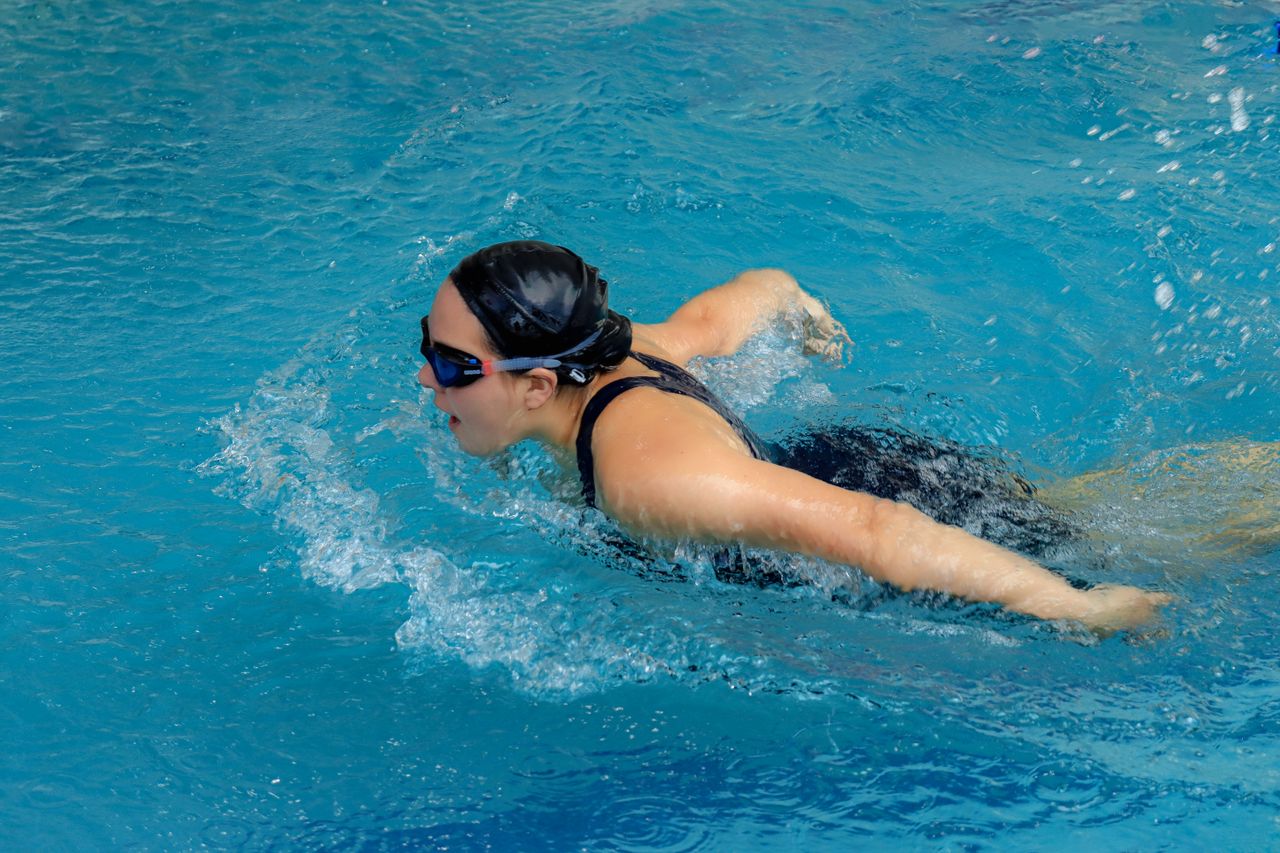
In 2025 and 2026, that pattern is shifting. More women in Dehradun are enrolling in structured swimming programmes than at any point in the city’s sporting history. They are joining as complete beginners in their 20s, 30s, and 40s. They are bringing their daughters and coming back themselves. They are using swimming for fitness, for stress, for recovery, and for the specific kind of confidence that only comes from mastering something you always told yourself you couldn’t do.
This blog explores what changed — and what it means for any woman in Dehradun who has been thinking about learning to swim.
THE HONEST CONVERSATION
Why Most Women in Dehradun Never Learned to Swim
Before we talk about what is changing, it is worth being honest about why it did not happen sooner. The barriers that kept women away from swimming in Indian cities are real, specific, and have nothing to do with a lack of interest or commitment.
- The Environment Did Not Feel Safe
This is the reason women cite most often — and it is the most important one. A shared public pool with no female supervision, no private changing facilities, and no separation between male and female swimmers is not an environment most women in India feel comfortable entering. It is not a question of being sensitive. It is a reasonable response to a real situation.
When a swimming centre does not have dedicated women’s batches, women-friendly changing facilities, and female supervision during sessions — the absence signals something about who that facility was actually designed for. Most women understand this signal and respond accordingly.
- The Timings Were Designed Around Other People’s Lives
Early morning slots that conflict with school preparation. Evening slots that overlap with cooking and household responsibilities. Batches designed for children that offer nothing for adult women with jobs, families, and schedules that do not fit neatly into standard coaching windows.
A swimming programme that works for women needs to offer flexibility — morning slots that allow a drop-off before office hours, or evening slots that begin late enough to be practical after a working day. When programmes do not account for the reality of how women’s time is structured, women simply cannot join.
- There Was No Role Model or Community to Join
Humans learn best in communities. A woman considering swimming classes is far more likely to enrol if she knows other women who swim — and far less likely if swimming feels like something she would be doing alone in an unfamiliar environment surrounded by strangers.
When swimming is predominantly male in a given city, the absence of women in pools is self-reinforcing. Women don’t see themselves represented in the activity, so they don’t join. When they don’t join, the environment stays male-dominated. And so the cycle continues — until something breaks it.
- The Physical Self-Consciousness Is Real
This is the reason that is hardest to say out loud — which is exactly why it needs to be said directly. Many women feel self-conscious about appearing in a swimsuit in a mixed, public setting. This is not vanity. It is a deeply human response to a social environment that women navigate every day.
A dedicated women’s batch at a professional swimming centre solves this entirely. When everyone in the pool is a woman, and the session is supervised by trained female staff, the social dynamic shifts completely. The focus returns to what it should always have been: learning, improving, and enjoying the water.
- Nobody Told Them the Benefits Were Specifically Right for Them
The case for swimming is strong for everyone. But the case for swimming is specifically, particularly compelling for women — and this specific case is almost never made.
Women carry a disproportionate burden of low-impact exercise needs: joint health as they age, core strength recovery post-pregnancy, cardiovascular fitness without the knee and lower back toll of running, mental health benefits during hormonal transitions, and long-term bone density support. Swimming addresses every one of these needs more effectively than almost any other form of exercise — and it does so in a zero-impact environment that women can sustain into their 60s, 70s, and beyond.
When nobody makes this case directly, women default to yoga classes, Zumba, and gym memberships — all valuable, but none of them offering the specific combination of full-body conditioning, low joint impact, and mental calm that swimming delivers.
THE TURNING POINT
What Is Actually Changing in Dehradun in 2025–26
The shift in women’s swimming participation in Dehradun is not happening by accident. It is happening because a specific set of conditions — the right infrastructure, the right environment, the right programming — has finally arrived in the city.
The Arrival of a Year-Round Indoor Pool
For decades, swimming in Dehradun was a summer activity. Outdoor, seasonal pools meant that even motivated learners could not build a consistent practice — every winter break disrupted whatever progress had been made, and every summer felt like starting again.
Read more:
Swimming Classes in Dehradun: Everything You Need to Know Before You Enroll
Why JP Sports is a Trusted Swimming Academy for Kids & Adults
An indoor, temperature-controlled, year-round pool changes this fundamentally. Skill retention in swimming — like in any physical discipline — depends on consistency. A woman who swims three times a week for twelve consecutive months will develop genuine technique and confidence. A woman who swims for three months and then stops for six will remain perpetually at beginner level. The indoor pool makes sustained progress possible for the first time.
Dedicated Women’s Batches With Proper Infrastructure
The single most important factor in women’s swimming participation is not the pool itself — it is the environment around the pool. Separate changing rooms designed for women, not retrofitted afterthoughts. Female supervisors and coaches available during women’s sessions. A scheduling structure that creates a genuinely women-only environment during dedicated time slots.
When a swimming centre makes these provisions genuinely — not as a checkbox, but as a structural commitment — the result is visible. Women come. They bring their friends. They bring their daughters. The community that was missing begins to form.
Adult Programming That Begins at Zero
One of the greatest fears of an adult beginner swimmer — male or female — is the prospect of being in a pool with people who already know what they are doing. The beginner who cannot float sitting alongside a teenager doing laps is an uncomfortable experience that stops many people from coming back for a second session.
Adult-specific beginner batches — designed for people who have never swum before, taught at a pace calibrated to adult learners, in an environment that does not include children or experienced swimmers — remove this barrier entirely. The adult who attends a class of fellow beginners finds something unexpected: solidarity, humour, and the specific relief of shared struggle. These classes convert better than any other format because the social environment is right.
Women Telling Other Women
The most powerful force in changing women’s sporting participation in any city is word of mouth. One woman who has a genuinely positive experience at a swimming programme will tell five others. She will forward a WhatsApp message, recommend it in the colony group, mention it at the school gate.
This word-of-mouth effect requires a programme that consistently delivers — where the coaching is good, the environment is comfortable, and the progress is visible. When those conditions are met, the community builds itself. The first woman in a social group to join becomes the reason the next four join.
THE CASE FOR WOMEN
Why Swimming Is the Best Sport a Woman in Dehradun Can Take Up Right Now
The generic case for swimming — life skill, fitness, mental health — applies to everyone. The specific case for women is worth stating separately, because it is stronger than most people realise.
Zero Joint Impact, Maximum Cardiovascular Return
Running is excellent for cardiovascular health — but it is hard on knees, hips, and lower back. HIIT and gym-based cardio produce results but carry injury risk. Swimming delivers cardiovascular conditioning equivalent to running, with zero joint impact. For women managing knee pain, recovering from injury, dealing with back problems post-pregnancy, or simply wanting a fitness practice they can sustain for decades without wear and tear — swimming is the medically endorsed answer.
A 45-minute swimming session burns between 400 and 700 calories depending on stroke and intensity — comparable to a strong running session, without the pavement pounding.
Full-Body Toning Without Bulk
One of the most common fitness concerns among women is the desire for full-body toning and core strength without the muscle bulk that heavy weight training can produce. Swimming develops exactly this — long, lean muscle development across the arms, shoulders, back, core, and legs, through the sustained resistance of water rather than the concentrated load of weights.
Competitive swimmers — female and male — are among the most proportionally developed athletes in sport, not because of any supplement or programme, but because the resistance of water in all four limbs simultaneously creates balanced, whole-body development. A woman who swims four times a week for six months will see changes in core strength and upper body definition that gym work alone rarely produces.
Mental Health and the Rhythm of Water
The psychological case for swimming is as strong as the physical case, and it is particularly relevant for women who carry a high mental load — the combination of professional responsibilities, household management, childcare, and social obligation that many women navigate simultaneously.
Swimming produces a specific form of meditative focus that other forms of exercise do not replicate. The rhythm of stroke and breath, the sound attenuation of the water, the temperature, the repetition — all of these combine to create a state of focused calm that is deeply restorative. Many regular swimmers describe lap swimming as the only time in the day when their mind genuinely stops.
Research on swimming and mental health consistently shows reductions in anxiety, improvements in sleep quality, and measurable effects on mood — outcomes that are especially significant for women dealing with hormonal transitions, postnatal changes, or the cumulative stress of modern working life.
A Life Skill That Protects the People You Love
For mothers of young children, the water safety case for swimming is the most urgent one. A mother who cannot swim is a mother who cannot intervene in a water emergency involving her child. India has among the highest drowning rates in the world — and the majority of those deaths are preventable with basic swimming competence.
Learning to swim as an adult is not just about fitness or personal development. For a parent, it is a safety decision that extends to every family trip, every beach holiday, every pool party, every river outing that their children will encounter in the years ahead.
Something That Belongs Only to You
This is the benefit that women who swim mention most often when asked what keeps them coming back — and it is the hardest one to categorise in a fitness framework. Swimming, particularly lap swimming in a dedicated women’s batch, becomes a personal space. An hour in the pool is an hour that belongs to nobody else. No notifications. No requests. No responsibilities. Just the water, the stroke, and the rhythm.
In lives that are frequently oriented entirely toward the needs of others, the experience of doing something purely for yourself — and doing it regularly, and getting better at it — has a significance that goes well beyond the physical benefits. It is restorative in a way that is difficult to explain to someone who has not experienced it, and immediately recognisable to someone who has.
WHERE TO LEARN IN DEHRADUN
Women’s Swimming at JP High Performance Sports Academy
Understanding why swimming is right for women in Dehradun is one part of the decision. The other part is knowing where to actually do it — at a facility that has made the specific structural commitments that make women’s swimming possible and comfortable.
JP High Performance Sports Academy on GMS Road, Dehradun is the city’s most complete multi-sport facility. Its swimming infrastructure is built to a standard that changes what is available in Uttarakhand — and its approach to women’s programming specifically addresses every barrier described above.
The Pool
- Half Olympic-size indoor swimming pool, operational year-round regardless of season or weather — temperature-controlled for comfort in every month of the year
- Dedicated kids’ pool running alongside the main pool — separate, shallow, and supervised for younger learners
- National training standard, meaning competitive swimmers training here are preparing on a facility equivalent to what they will encounter at qualifying meets
- Separate safe slots scheduled specifically for women and girls — creating a genuinely private, comfortable training environment
The Women’s Programme
JP Sports schedules dedicated women’s batches at the main pool, designed to serve every level of swimmer:
- Complete beginners: Women who have never been in a pool, or who have not swum since childhood. The programme begins with water comfort, breathing, floating — and builds at a pace calibrated to adult learners, not children’s schedules.
- Intermediate swimmers: Women who know the basics but want to improve technique, build endurance, and develop consistent stroke mechanics. This level focuses on form, efficiency, and building the confidence to swim longer distances without stopping.
- Fitness swimmers: Women using swimming primarily for fitness, weight management, cardiovascular conditioning, and mental wellness. Structured workouts that deliver measurable results within 6–8 weeks of regular attendance.
- Girls and teenagers: Young female swimmers who want to train in a focused, women-only environment — separate from mixed-gender batches and supervised by appropriate staff.
The Infrastructure
- Separate, private changing facilities designed for women — not shared with male users
- Female supervision available during dedicated women’s sessions
- Lockers and storage for personal belongings during training
- A broader multi-sport ecosystem: women who train here also have access to yoga (160 sq m dedicated studio), Zumba (141 sq m hall), the gym, physio support, and steam rooms — making JP a one-stop wellness destination rather than just a pool
Timing and Accessibility
JP Sports is open daily from 6 AM to 10 PM — with early morning slots available before school and office hours, and evening slots that extend late enough to accommodate working women’s schedules. The academy is located behind Reliance Mart, near Rohan Motors, on GMS Road — central and accessible from across Dehradun.
“JP High Performance Sports Academy is not a swimming centre that happens to have a pool. It is Dehradun’s most complete multi-sport facility — and its women’s swimming programme was built specifically to address every reason women previously couldn’t join.”
► Enquire about women’s swimming classes at JP Sports, Dehradun →
GETTING STARTED
What to Expect in Your First Month of Swimming Classes
For any woman joining swimming classes for the first time as an adult, the first few sessions carry a specific kind of emotional weight. The nervousness of being a beginner. The unfamiliarity of the water. The gap between what you want to do and what your body currently knows how to do.
Here is an honest picture of how the first month typically unfolds — so that the reality matches the expectation.
Week 1 — Water Comfort and Breathing
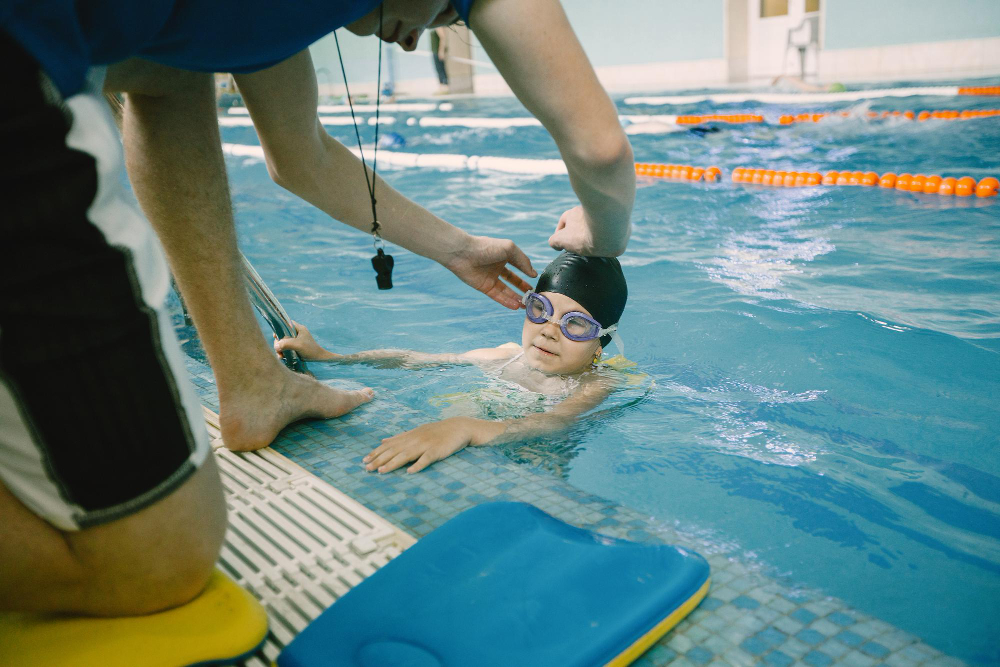
The first priority is not strokes. It is breath control and buoyancy. A good coach will begin here: standing in the shallow end, learning to exhale into the water, understanding how the body floats when it relaxes. Many adult beginners are surprised by how much of swimming is mental — the willingness to let the water support your weight rather than fighting it. By the end of week one, most beginners can float, exhale comfortably underwater, and kick while holding the pool edge.
Week 2 — Arms, Kick, and First Strokes
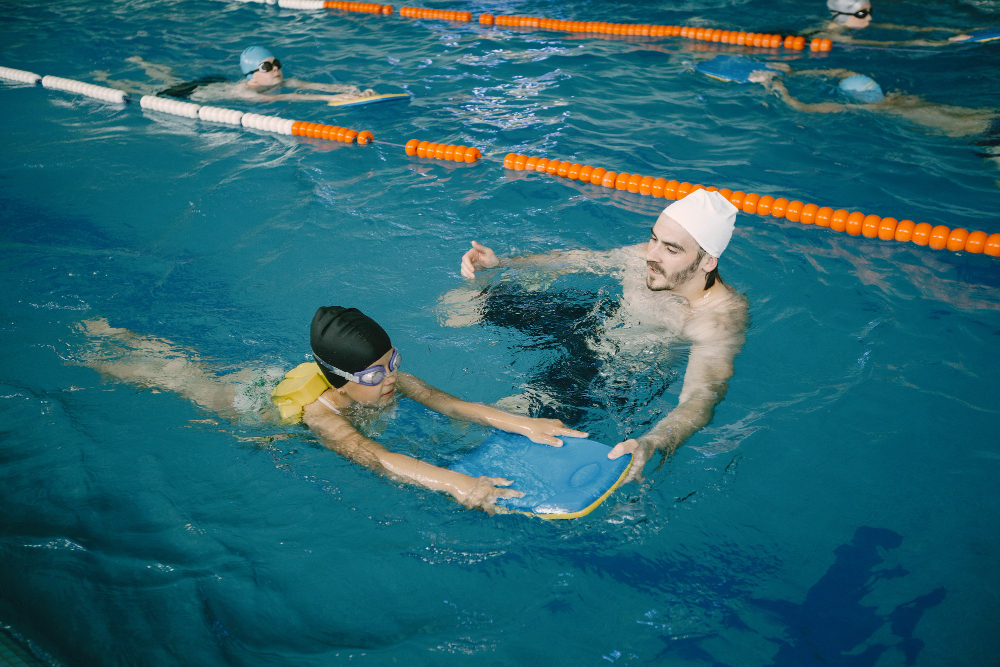
Freestyle (front crawl) is typically the first stroke taught to adult beginners because it is the most intuitive and the most useful for fitness swimming. The second week introduces basic arm movement combined with kick, with a floatboard for support. The first time a beginner covers a half-length without stopping is one of those small but significant athletic achievements that most adults have not experienced in years.
Week 3 — Coordination and Breathing Rhythm
The hardest part of learning to swim as an adult is coordinating breathing with stroke. The temptation to lift the head straight up rather than rotating to the side is almost universal — and it disrupts the stroke mechanics that make swimming sustainable. Week three typically focuses on this coordination, with drills that isolate the breathing rotation until it becomes automatic.
Week 4 — Building Distance and Confidence
By the end of the first month, most adult beginner swimmers can complete one or two lengths of the pool without stopping, with recognisable freestyle technique and controlled breathing. The improvement from session one to session twelve is significant — and visible. This is the moment when swimming stops feeling like a challenge and starts feeling like a skill.
JP Sports insight: Adult learners who attend a minimum of three sessions per week consistently show faster progress than those attending once or twice. Muscle memory and water confidence build much more effectively with frequency — even short sessions are more valuable than longer but less frequent ones.
FAQ
Frequently Asked Questions — Women’s Swimming Classes in Dehradun
Is there a women-only swimming programme at JP Sports in Dehradun?
Yes. JP High Performance Sports Academy schedules dedicated women’s batches with separate time slots, private changing facilities, and female supervision during sessions. The programme is open to all levels — complete beginners through to experienced swimmers and fitness swimmers.
I am an adult who has never swum before. Can I join?
Yes — and you are exactly the person this programme was designed for. The adult beginner batch at JP Sports starts from the very beginning: water comfort, breathing, floating, and basic stroke technique, at a pace that suits adult learners. No prior experience is required. Many women who join the adult beginner programme have never been comfortable in water before.
What are the swimming class timings for women at JP Sports?
JP Sports is open daily from 6 AM to 10 PM, with early morning and evening time slots available. For current women’s batch timings and availability, contact the academy directly at jpsports.in or WhatsApp +91 73021 78717. The team will match you to the batch that best fits your schedule.
What are the swimming class fees for women in Dehradun?
JP High Performance Sports Academy offers monthly and annual membership plans across age groups and programme types. For current fee details specific to the women’s swimming programme, contact the academy directly. The team can provide a complete breakdown based on your preferred batch and membership type.
Is the pool at JP Sports open year-round?
Yes. JP Sports has a half Olympic-size indoor, temperature-controlled pool that operates every day of the year regardless of season or weather. This makes it one of the only all-weather swimming facilities in Dehradun — meaning your training is never interrupted by winter, rain, or heat.
I feel self-conscious about swimming in front of other people. Will the women’s batch feel comfortable?
Yes. The dedicated women’s batches at JP Sports are attended only by women — there are no mixed lanes or shared timings with male swimmers during these sessions. The changing facilities are private and separate. The environment is specifically designed to feel comfortable and non-judgmental. Many women who join the programme cite this as the reason they finally decided to learn after years of hesitation.
Can I bring my daughter to swim with me?
Yes. JP Sports has a dedicated kids’ pool alongside the main pool, with children’s swimming programmes running separately from adult batches. You can enrol simultaneously — which many mothers and daughters do — though you will typically be in different sessions based on your respective levels and age groups.
Is swimming good for weight loss?
Yes — swimming is one of the most effective forms of cardiovascular exercise for weight management. A 45-minute swimming session burns between 400 and 700 calories depending on stroke and intensity. More importantly, because swimming is zero-impact, it can be sustained six or seven days a week without the joint wear that running or high-impact gym work produces — making it exceptionally effective for consistent, long-term results.
THE DECISION
The Water Is Waiting
For every woman in Dehradun who has thought about swimming — and filed it away under ‘maybe someday’ — the conditions have changed. The pool is indoor and year-round. The batches are women-only. The coaching is structured. The changing facilities are private. The timings work around real lives.
The reasons that made it impossible before are, one by one, no longer there.
What swimming gives back — the fitness, the calm, the strength, the hour that is entirely yours — is something that no other form of exercise in Dehradun currently offers in this combination. The women who have already joined will tell you the same thing: the only regret is not starting sooner.
JP High Performance Sports Academy is open daily from 6 AM to 10 PM. The women’s swimming programme is enrolling now.
Your first session could be this week.